
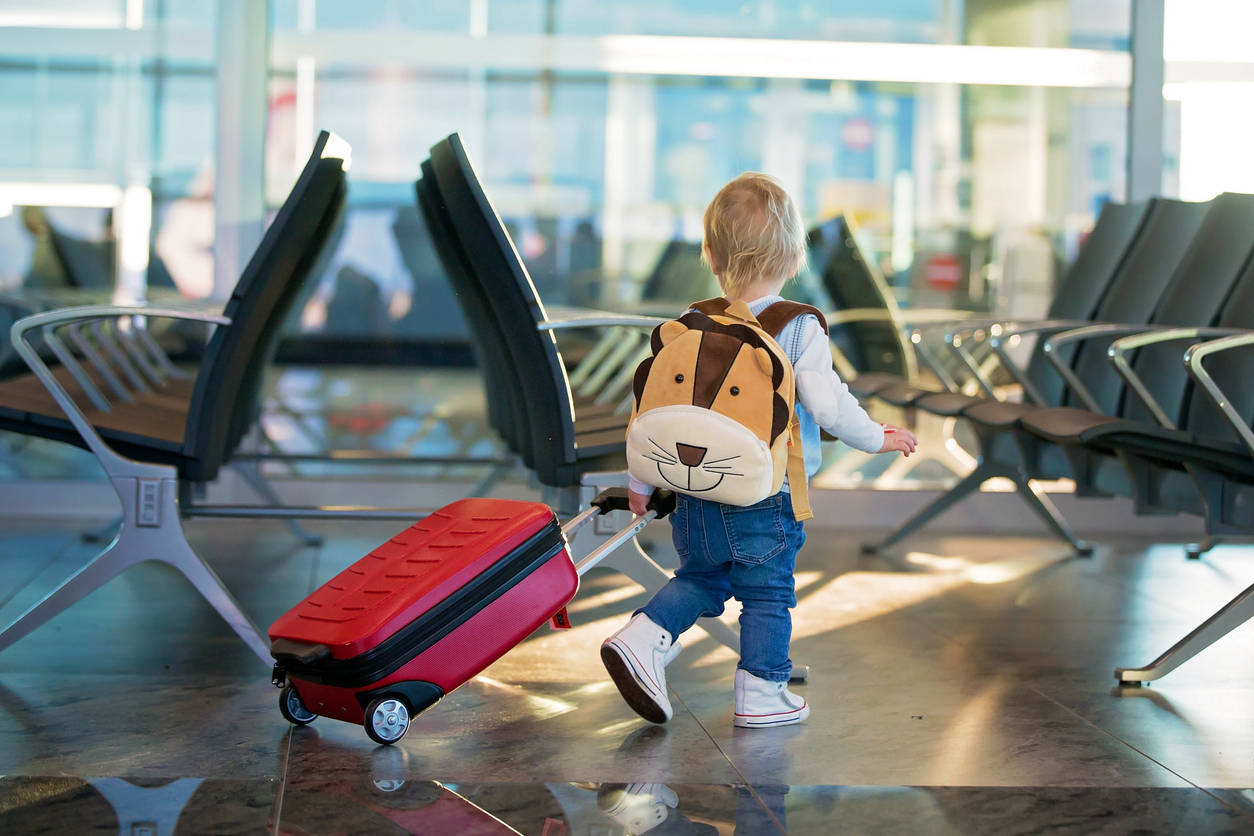
Visiting family for the holidays? Travel during the busiest time of year can be a lot for your little ones! Routine changes, long travel days, and overstimulation can all impact your child’s mood and health. Whether you’re hitting the road or taking to the sky, having safe travel tips in your back pocket can prevent your children from feeling overwhelmed and help everyone stay healthy on the journey—all while keeping the “Are we there yet?” moments to a minimum!
Keep reading for our advice on how to keep your family happy and healthy this holiday season:
Packing
Healthy holiday travel start with packing. Having the right resources on hand will help you feel prepared, confident, and safe. Here are some must-haves we’d recommend putting in your suitcase:
- Medications: Keep daily prescriptions, pain relievers, and allergy supplies (like EpiPens or antihistamines) on hand for unexpected needs
- Hydration tools: Water bottles, sippy cups, or electrolyte packs help everyone stay hydrated
- Comfort items: Favorite blanket, stuffed animal, or travel pillow can make the journey easier
- Snacks: Portable, non-messy options keep energy steady and moods happy
- Entertainment: Small toys, books or activities help pass long waits
- Sanitizing supplies: Hand wipes or sanitizer make quick cleanups simple
- Emergency items: A small first-aid kit with things like a thermometer, band-aids, antiseptic wipes, and gauze pads
Tips Based On Mode of Transportation
Car
If you’re road tripping this year, your child may run into common problems in the car, including restlessness, car sickness, boredom, or even anxiety. Combat these issues by planning regular rest stops, stretching breaks, and engaging activities to keep everyone comfortable and happy.
Airplanes
Flying can be stressful for kids due to confined spaces, long waits, and changes in cabin pressure. Let kids move around when you can, bring snacks, and pack quiet toys or books to keep their minds busy.
Train
Train cars can also feel cramped and noisy, which can be tough for kids. Keep them safe and comfortable by offering water and small snacks regularly, dressing them in layers for temperature changes, keeping their hands clean with wipes or sanitizer, and packing quiet toys or books to keep them entertained in their seat.

Baby-Specific Tips
Children under the age of 2 are at a higher risk for discomfort and stress during travel. Follow these baby-specific travel tips to help keep your little one happy and healthy:
- Feeding: Bring bottles, breast milk, formula, or travel-friendly snacks to keep your baby nourished and comfortable during the trip, and try to stick to their usual meal times. Pack extra in case of delays and have a small cooler or insulated bag to keep milk at the right temperature.
- Diaper changes: Pack extra diapers, wipes, and if possible, a portable changing pad for easy changes on the go. Plan for a few extra diapers in case of delays.
- Ear-pressure techniques: Help relieve discomfort during takeoff and landing with feeding, pacifiers, or gentle sucking motions.
- Sleep: Bring familiar blankets or sleep aids, and watch for your baby’s sleep cues (like yawning, rubbing eyes, or fussiness) to help them stay on their usual nap schedule as much as possible during travel.
- Vaccinations and travel prep: Make sure routine immunizations are up to date and check if any extra precautions are needed for your destination
- Entertainment: Simple toys or teething rings can keep your baby engaged without overwhelming them.
Travel Red Flags That Need a Doctor
Before you go, make sure to note down pediatricians or urgent care clinics at your travel destination in case of an emergency. Knowing where to turn ahead of time can save stress if your child suddenly becomes unwell.
Signs to watch:
- Fever: A high temperature can be a sign of infection or illness that may need medical attention
- Trouble breathing: Rapid, labored, or noisy breathing could indicate a serious respiratory issue
- Persistent vomiting: Continuous vomiting can lead to dehydration and may signal an underlying problem
- Unusual fussiness: Excessive or inconsolable crying may indicate pain, discomfort, or illness
- Sudden changes in behavior: If your child suddenly acts very differently than usual, such as becoming unusually quiet, very lethargic, or extremely irritable, it could be a sign of illness or distress that needs attention
Holiday Health Support for Your Family
If you’re in need of extra support this holiday season, Des Moines Pediatrics is here for you. Our team can answer your questions about keeping your child healthy while traveling, provide guidance on managing stress and sleep changes, and offer advice on common seasonal illnesses. Click the button below to schedule an appointment and give your family the support you need to enjoy a happy, healthy holiday season.